Application of large-scale tests: planning and good practices
Learn about the care taken to organize tests with many participants, prepare support, monitor the application and analyze occurrences.
Applying a test to many people requires more than increasing the number of accesses. The work involves standardizing questions, organizing classes and schedules, preparing communication, defining responsibilities and creating a procedure for technical or pedagogical occurrences.
Planning must begin with the impact of the assessment and the actual conditions of the public. A well-organized application reduces decisions during the test and allows the team to focus attention on situations that really need monitoring.
Map the scope and distribute responsibilities
Record number of participants, groups, times, duration, question format and level of supervision. Identify who takes care of content, configurations, communication, support and incident analysis. Each person responsible must know the limits of their actions.
Create a timeline from proof review to results release. Include moments for approval, technical testing, participant registration, sending instructions and final conference. The absence of one of these steps usually generates urgent corrections close to the application.
Standardize content and correction criteria
Use a matrix to distribute content, skills, difficulty and weights. When there are different versions, check that they remain equivalent. Randomization without a balanced question bank can result in participants receiving tests with different levels.
Review statements, alternatives, templates and supporting files with a small team before publishing. Open-ended questions need clear rubrics, especially when multiple raters participate in marking. This standardization improves the comparability of results.
Approval the complete configuration
Test the assessment as a participant: access, screen order, media, saving, time limit, sending and final message. The approval must use parameters close to the real ones and include the planned identification or supervision resources.
In Educatena, period settings, duration, entry limit, attempts, weights, feedback and cutoff score are associated with the assessment. A checklist helps to avoid differences between what was communicated and what is configured.
- Confirm dates, times and reference zone.
- Validate templates, weights and approval criteria.
- Test images, videos and files used in the questions.
- Review groups and participants associated with the test.
- Simulate the support flow and eventual reapplication.
Plan communication and support
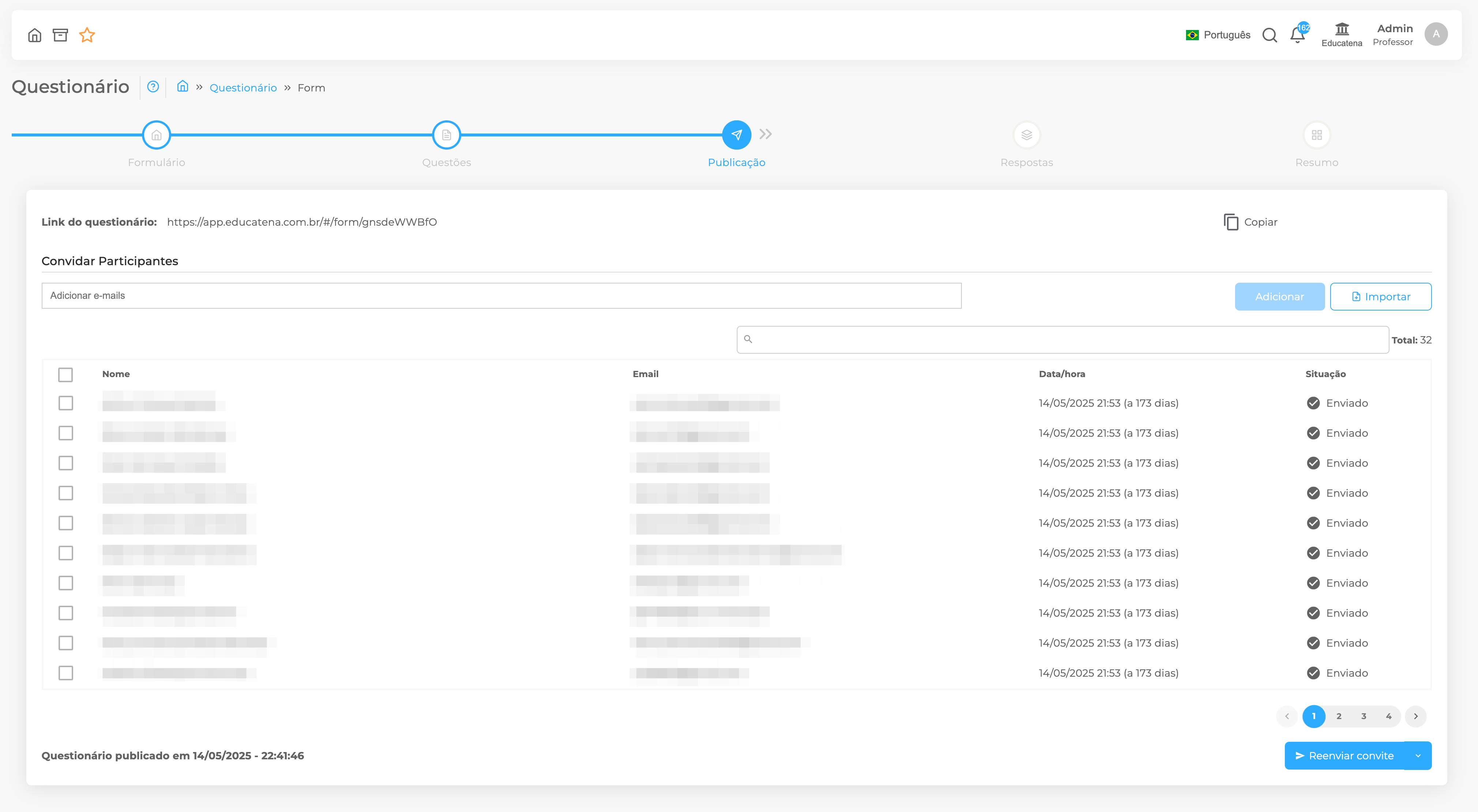
Instructions must arrive in advance and use a single source of truth. Enter address, credentials, times, duration, equipment, permitted materials and service channel. Changes need to be communicated through the same channels used initially.
Classify the types of service to quickly direct each case: difficulty in access, technical failure, doubt about rules or questioning of content. Record time, participant and action taken. This history is useful for auditing and improving future applications.
Monitor the application with defined criteria
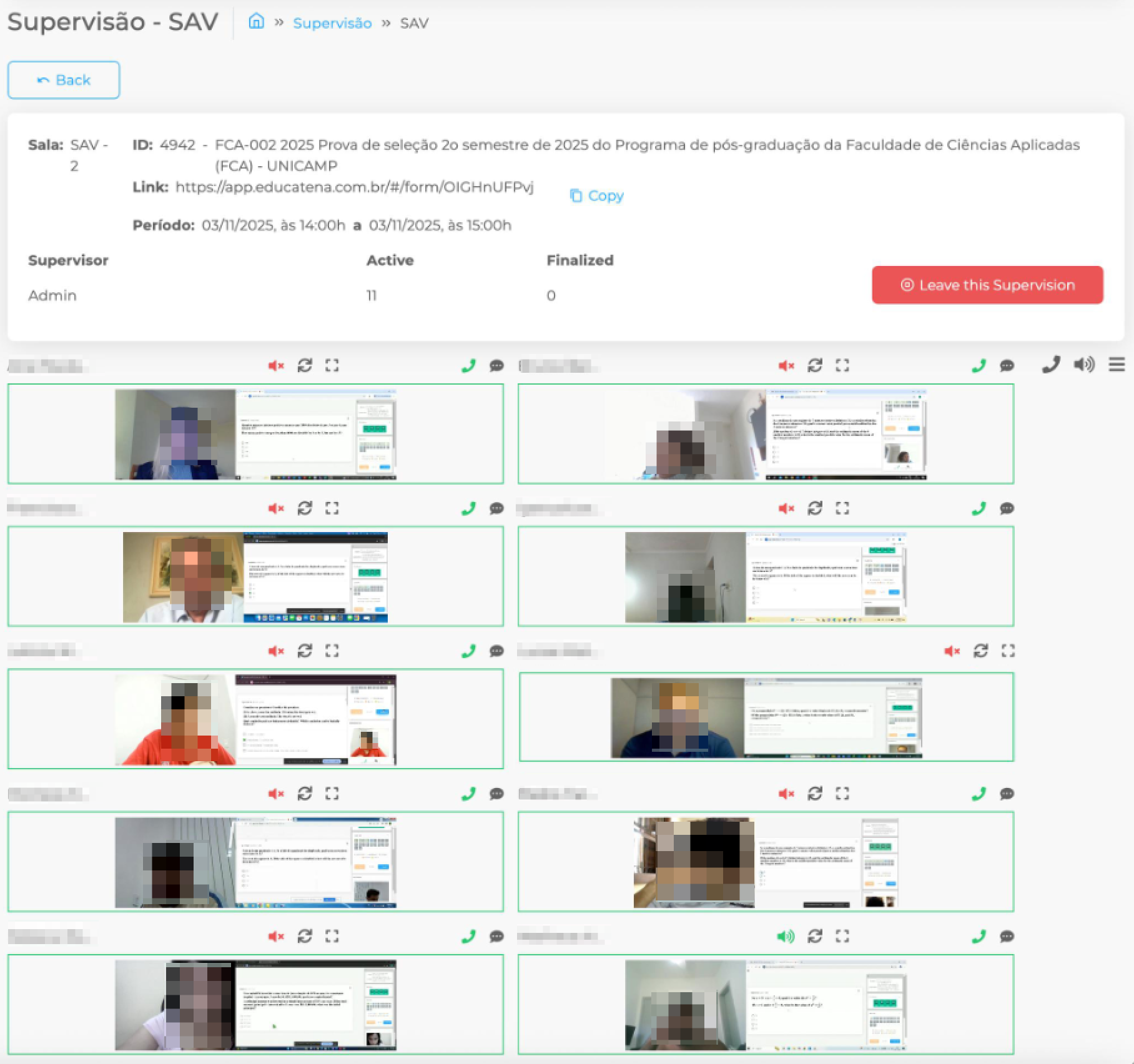
Monitoring panels and virtual rooms help you visualize the progress of the test. If there are supervisors, clearly allocate participants and determine which events should be recorded. The team should not create new rules during the session.
When there is recording and subsequent auditing, notify participants in advance. Automatic events can prioritize snippets for review, but should not be interpreted in isolation. Human analysis needs to consider context, connection quality, and disclosed rules.
Make a technical and pedagogical conclusion
After application, confirm shipments, open cases and cases that require reapplication before releasing results. Also evaluate issues with a high error rate, time used and questions received by support.
Hold a short retrospective with the teams involved. List what worked, what generated service and what changes should be included in the next cycle. Scale becomes sustainable when knowledge from each application is incorporated into the next process.
Maintain a proportionate contingency plan
List events that could compromise the application and define signals, culprits and responses. Individual connection problems require different treatment than broad unavailability. The plan must explain when to wait, reopen access, reschedule or forward a decision to coordination.
Avoid promising a one-size-fits-all solution to any failure. Record available technical evidence, time and number of people affected before taking action. The rules need to preserve equivalence between participants and consider the stage each session was at.
Share the plan only with those who need to carry it out, and provide participants with simple instructions on how to ask for help. After the test, review whether the answers were sufficient and update the procedure.
Perform at least one tabletop exercise with coordination, support, and supervision. Simulating an incident helps to check whether the contacts are correct, whether there is authority to decide and whether communication can quickly reach the affected people.
Also define how to preserve progress when part of the team becomes unavailable. Substitute contacts, access to guidance and a central view of incidents prevent the operation from depending on a single person. The contingency must be simple enough to work under pressure.
Include learning from this simulation in official documentation.
Conclusion
Large-scale tests depend on standardization, approval, communication and well-defined responsibilities. Educatena offers an integrated flow to configure, distribute, monitor and analyze assessments, while the institution maintains its pedagogical and operational criteria.