Secure online assessment: good practices for institutions
Learn about planning, communication, access and supervision to apply online assessments safely and with a good experience.
Security in online assessments does not depend on a single resource. It results from the combination of planning, proportional rules, transparent communication, support and subsequent analysis.
The institution needs to protect the integrity of the test without making the experience unnecessarily complex. Controls must consider the risk of the assessment, the profile of participants and real access conditions.
1. Rate the level of risk
A review activity and a highly relevant selection process do not require the same controls. Classify the impact of the result and apply measures compatible with each scenario.
This criterion avoids both the lack of protection in critical assessments and the excess of barriers in training activities.
2. Set up clear enforcement rules
Define access window, duration, number of attempts and expected behavior. Inform in advance which resources are allowed and which procedures will be adopted in the event of a technical failure.
- Use shuffling when there is enough question bank.
- Determine time limits consistent with the complexity of the test.
- Keep a support channel available during critical applications.
- Log exceptions and reapplications consistently.
3. Prepare infrastructure and participants
Test the browser, camera, microphone and connection in advance when these resources are needed. Provide technical requirements in plain language and offer a familiarization activity.
Preparation reduces interruptions and allows participants to focus attention on the assessed content.
4. Use supervision proportionately
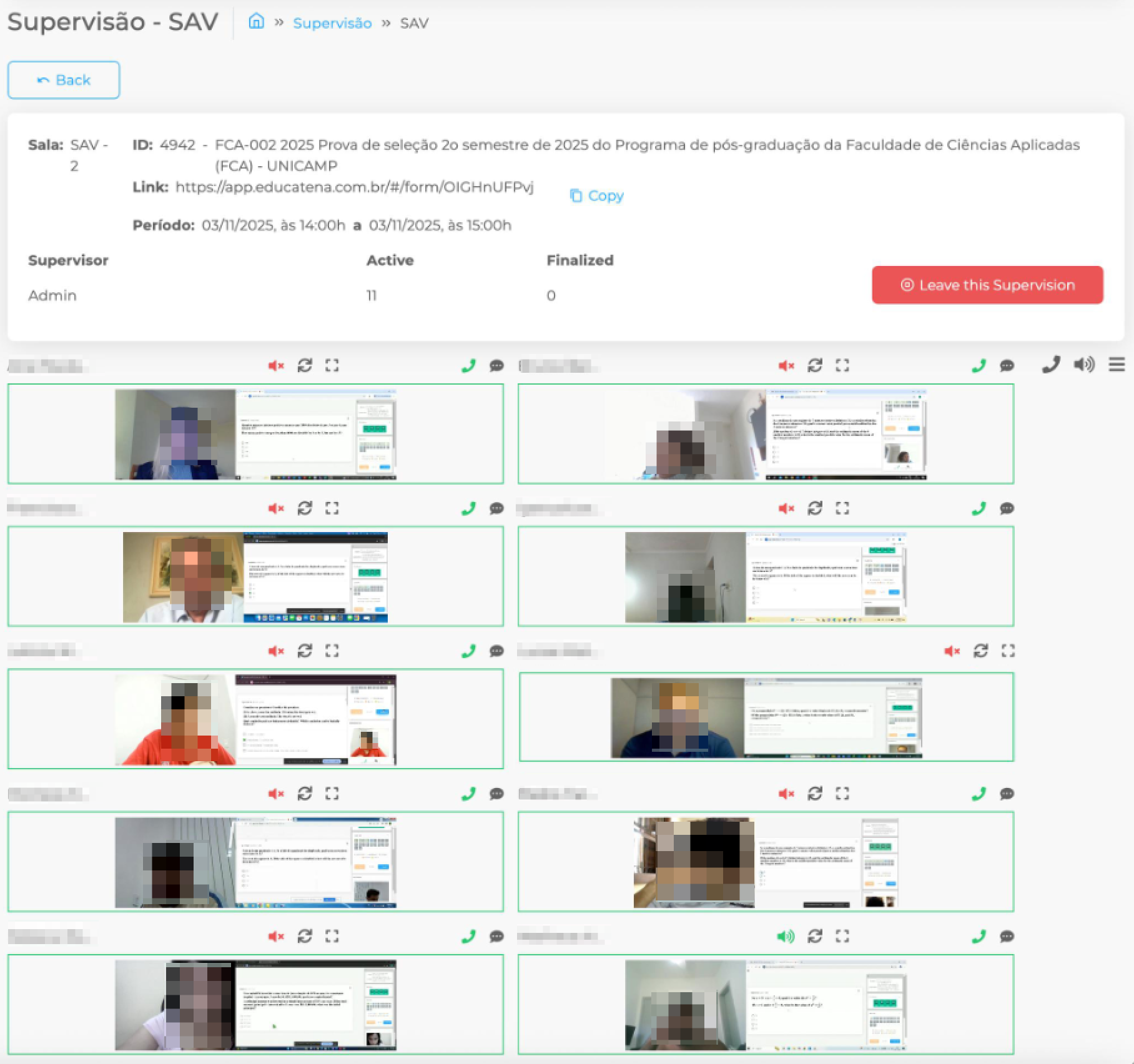
Webcam monitoring and screen sharing may be suitable for higher impact assessments. The institution must explain how supervision works, what data is used and for how long it will be needed.
Automatic alerts should support human analysis, not replace careful assessment of context. Unusual behavior does not, in isolation, represent proof of irregularity.
5. Analyze the application after the test
Review technical incidents, recurring questions, average response time and questions with behavior outside of expectations. This analysis helps to improve future assessments and adjust guidance.
Document decisions related to reapplications or relevant occurrences to maintain a coherent and auditable process.
Conclusion
A secure online assessment balances integrity, transparency and accessibility. Planning ahead, communicating clearly and reviewing application results are practices that are as important as technological resources.