Facial identification in online tests: how it works and when to use it
Understand the role of facial identification at the beginning of online tests, its limits and transparency and support precautions.
Confirming who initiates an assessment can be important in institutional tests, certifications and selection processes. In the online environment, a selfie recorded at the beginning of the session offers an additional element for identity verification and application auditing.
This resource should not be presented as an isolated or infallible solution. Identification, supervision, access rules and occurrence analysis form a set of controls. The institution needs to define when the measure is necessary, explain its use and offer guidance to anyone who encounters technical difficulties.
What is the role of facial identification?
Initial identification relates a visual record to the participant's access. It helps the responsible team to check the session and can complement existing credentials, registration and other information. Its objective is to add evidence to the process, not replace any form of validation.
The need varies depending on the assessment. A study activity may not justify this control, while a test of greater impact may require additional confirmation. The decision must consider purpose, risk, audience and ability to provide support.
How does the flow work for the participant?
When the institution enables the feature, the participant receives instructions to allow access to the camera and record a selfie before the test. Adequate lighting, a clean lens, and frontal framing contribute to a useful record.
Orientation must take place before the day of application. A test reduces doubts about browser permissions and allows you to identify equipment without a camera. If registration cannot be completed, the institution needs to have a support channel and a contingency procedure.
- Inform in advance that the camera will be needed.
- Explain how to grant permission in the browser.
- Guidance on lighting and framing.
- Make a test available before critical reviews.
- Define how to handle failures or adaptation needs.
How does identification integrate with supervision?
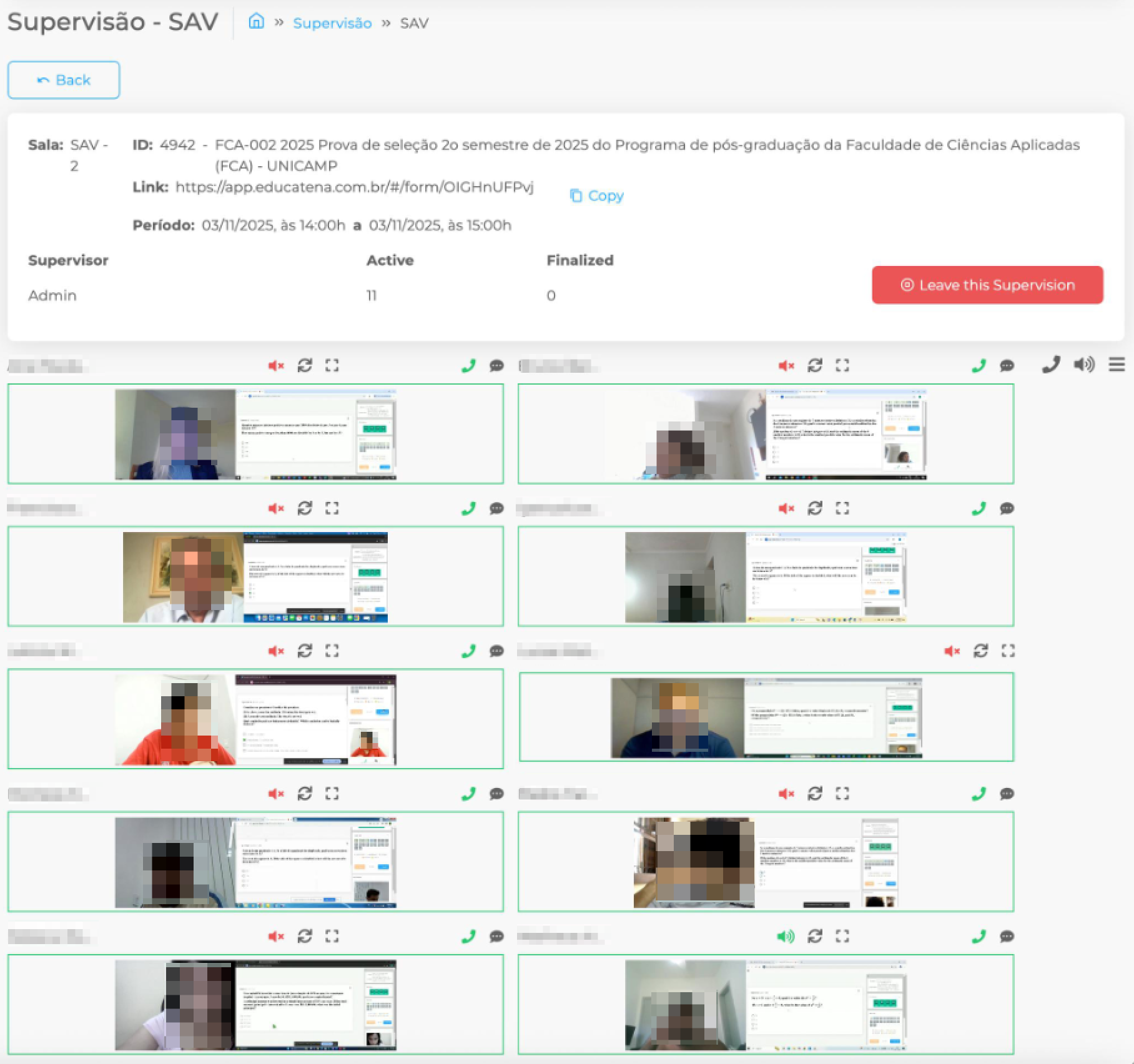
At Educatena, the initial selfie can be part of the flow of a monitored assessment. During the session, webcam, screen and audio can be monitored or recorded depending on the configuration, and supervisors can record incidents in the Virtual Assessment Room.
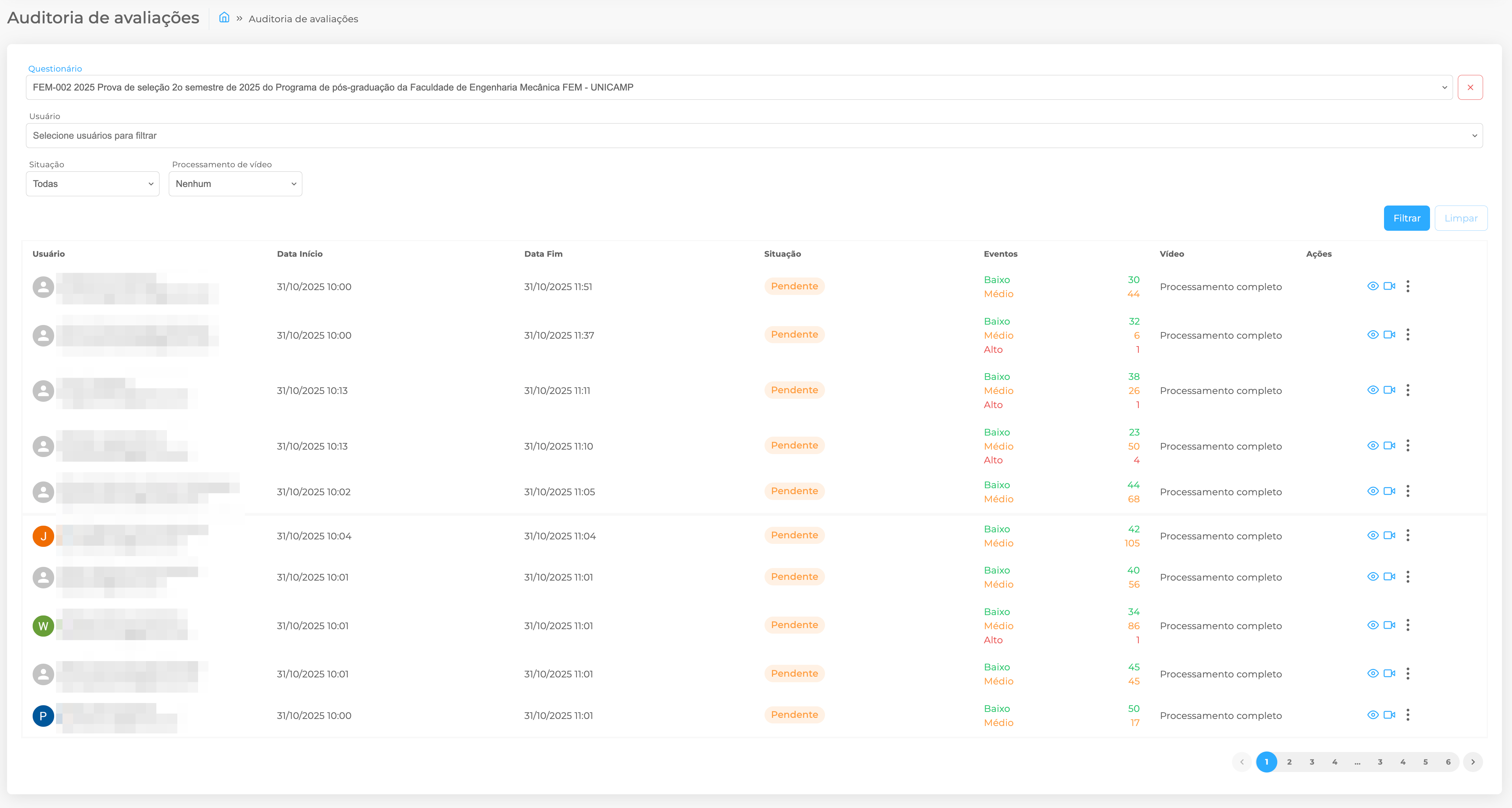
In the post audit, the initial log and session events help organize the review. The assessment of an occurrence continues to depend on human analysis. Differences in lighting, connection or positioning should not automatically be made a conclusion about the participant's conduct.
Communicate purpose and rules clearly
The institution must explain why registration is requested, at which stage it will be used and who is responsible for the process. This communication needs to be accessible before agreement and not hidden in lengthy instructions.
It is also necessary to align use with the policies and obligations applicable to the organization. The website does not replace legal or data protection advice; each institution must evaluate its responsibilities, applicable bases, deadlines and internal procedures.
Prepare alternatives and contingencies
Unavailable cameras, blocked browsers, or accessibility conditions may prevent standard streaming. Define in advance how support will verify the issue and who can authorize a workaround or retry.
Treatment needs to be consistent and documented. A contingency should not improvise identity criteria or expose participants. Previous tests, clear requirements and a prepared team reduce the number of exceptions during the test.
When is it worth using?
Consider additional identification when the outcome has a relevant impact and there is a justified need to associate the session with the participant. Certifications, selection processes and institutional assessments are possible examples, but the decision depends on the context.
Avoid hoarding controls just because they are available. Proportional security combines sufficient measures for the risk, good experience and real analytical capacity. A record that no one reviews or an unsupported procedure tends to create more difficulty than confidence.
Evaluate the process after application
Track how many people completed registration without help, which questions reached support and which situations required an alternative. These data show whether the instructions and the previous test were sufficient, without transforming the analysis into the participants' judgment.
Talk to supervisors about quality of records and clarity of protocol. If a step did not produce useful information, adjust it before the next test. Security controls must be reviewed periodically to remain fit for purpose.
Document changes and keep public guidance in sync with actual flow. A predictable experience depends on both technology and consistency between communication, configuration and service.
Also consider the participants’ perception through questions and assistance received. Recurring difficulties may indicate that the instruction needs examples, that testing must be anticipated, or that the technical requirement deserves a clearer alternative.
When reviewing, compare the measure adopted with the risk that motivated its use. If the support cost or the number of exceptions grows without producing relevant evidence, reevaluate the design. Proportionality requires observing results and not just repeating previous settings.
Conclusion
Facial identification can enhance initial verification in online exams when used with clear purpose, communication and support. Integrated into Educatena's supervision, it adds evidence to the process without removing responsibility for the analysis and adopted rules from the institution.