Artificial intelligence to create questions: possibilities and precautions
Understand how to use artificial intelligence to support the creation of questions without compromising on pedagogical review, context and quality.
Artificial intelligence can help teachers and teams transform objectives, texts and content into suggested questions. Its main benefit is in accelerating the first version and offering varied starting points, especially when professionals need to prepare activities for different classes or levels.
Speed does not mean automatic publishing. Every issue needs pedagogical, factual and linguistic review. The person responsible must confirm that the item corresponds to the content taught, that the answer key is correct and that the level of difficulty is appropriate. AI supports the work; the decision remains human.
In which steps does artificial intelligence help?
AI can suggest statements, alternatives, examples and variations of the same skill. It can also help to convert a base text into questions or propose objective and essay questions. This reduces the time spent staring at a blank page.
Another possible use is to explore different cognitive levels. Instead of asking just one question about a topic, the teacher can ask for suggestions that involve remembering, interpreting, applying or analyzing. Proposals need to be compared with the real objective of the class and assessment.
Provide context for better suggestions
Generic requests tend to produce superficial questions. Enter discipline, audience, content, skill, difficulty, format and number of alternatives. When there is specific material, only use excerpts that can be treated in accordance with the institution's rules.
A good command describes the expected result and limits. For example: creating a multiple choice question for a given level, with one correct answer, three plausible distractors and an explanation of the answer key. Even so, the answer should be considered a draft.
- State the learning objective.
- Describe the profile and level of the audience.
- Choose format and difficulty.
- Ask for justification for the correct answer.
- Request language compatible with the class.
Carry out a complete pedagogical review
Check that the question measures the intended skill and can be answered with the expected knowledge. A long statement can introduce reading difficulties that are not part of the objective. In objective questions, check if only one alternative is clearly correct.
Analyze the distractors: they should represent plausible errors, without unintentional gotchas or clues. Also review absolute terms, differences in length and grammatical patterns that reveal the answer. In essay items, prepare correction criteria before application.
Check facts, calculations and references
Artificial intelligence models may produce incorrect, outdated information or non-existent references. Redo calculations, consult reliable sources and confirm dates, concepts and citations. This step is essential even when the text appears safe.
Avoid entering personal information, confidential evaluations or materials that should not be sent to the service used. Internal data protection and intellectual property rules remain valid when creating content with AI.
Integrate the revised questions into the bank
After human approval, register the question with discipline, topic, difficulty, answer key and review date. This organization allows you to find, update, and combine items later. Do not mix suggestions that have not yet been reviewed with the collection used in tests.
Monitor the item's performance after application. Many errors can represent real difficulty, but they can also indicate ambiguity. The history helps decide whether the question should be kept, adjusted or removed.
Create a responsible use process
Define who can generate, review, and approve issues. A simple checklist—alignment, accuracy, clarity, template, and appropriateness—makes the flow repeatable. When several people collaborate, identify responsible parties and relevant changes.
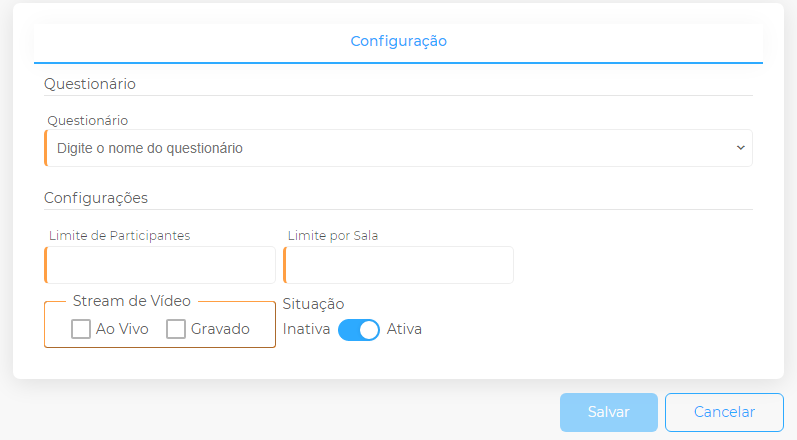
Educatena allows you to use artificial intelligence to create questions within the assessment flow. The resource gains value when it is connected to an editorial process: suggestion, human review, organized registration, application and analysis of results.
Apply a simple production flow
Start by selecting a skill and gathering references that will be considered correct. Generate a few question alternatives, compare the proposals and choose only those that have potential. Then, rewrite the statement and answers using the language adopted by the institution.
Ask a second reviewer to solve the item and explain how they arrived at the answer. If the interpretation diverges from the objective, adjust or discard the question. Only then register the answer key, difficulty, category and feedback in the database.
After application, use results and comments to close the loop. AI can speed up creation, but quality comes from the decisions made at each step and the learning accumulated about the things that worked.
Maintain a visible distinction between suggested, reviewed, and approved content. This separation prevents a draft from accidentally entering a test and makes it easier to identify where a question needs to be returned when a doubt arises during approval.
If the team uses recurring templates or commands, review them when the curriculum, audience, or criteria change. An order that worked in one discipline may produce inadequate results in another. Documenting approved examples helps without turning creation into an automatic process.
Conclusion
Artificial intelligence can reduce initial work and expand ideas, but it does not replace pedagogical knowledge or review. Used as an assistant within a clear process, it helps to create questions more quickly and keeps the teacher responsible for the final quality.