How to write good questions for an assessment
See a script for writing clear statements, plausible alternatives, correct templates and consistent correction criteria.
A good question produces evidence about a specific skill. To do this, it needs to have a clear purpose, language compatible with the audience and defined response criteria. Confusing questions may measure incidental interpretation, familiarity with pranks, or tolerance for ambiguity rather than intended content.
Elaboration improves when it follows a process: define objective, choose format, write, review, apply and analyze the item's behavior. This cycle applies to both objective questions and open-ended answers.
Define what the question should evaluate
Write the skill before the statement. Verbs such as identify, compare, apply, justify and analyze help clarify expected performance. Avoid trying to measure too many independent objectives in a single question.
Confirm that the content has been worked on and that the question has adequate difficulty. Legitimate difficulty comes from the reasoning or knowledge required, not from obscure instructions or irrelevant details.
Write a clear and sufficient statement
Present context and question with direct language. Include all necessary data and remove information that does not contribute to the solution, except when the skill involves selecting relevant information.
Avoid negatives when a positive formulation is possible. If a word like “incorrect” is essential, highlight it clearly. Also review whether images, tables and references can be understood on the device used in the test.
Create plausible alternatives and distractors
In multiple choice, there must be an unequivocally correct answer within the context presented. Distractors represent possible errors and help to observe how the participant reasoned. Absurd alternatives only visually increase the issue.
Maintain similar length, grammatical structure and level of detail. Avoid patterns where the correct answer is always the longest or the only one with technical language. Do not use clues from one question to answer another.
- Guarantee only one correct answer.
- Base distractors on plausible errors.
- Avoid “all of the above” when compromising the analysis.
- Do not repeat words from the statement only in the correct answer.
- Alternate the position of the template when assembling the test.
Plan correction of open-ended responses
An essay question should indicate what the answer needs to address. Broad verbs like “commente” can generate different interpretations. Inform criteria, limits and materials allowed according to the objective.
Create a rubric with dimensions and performance levels before application. When there are several brokers, use examples and align. The consistency of correction is part of the quality of the question.
Review content, language, and configuration
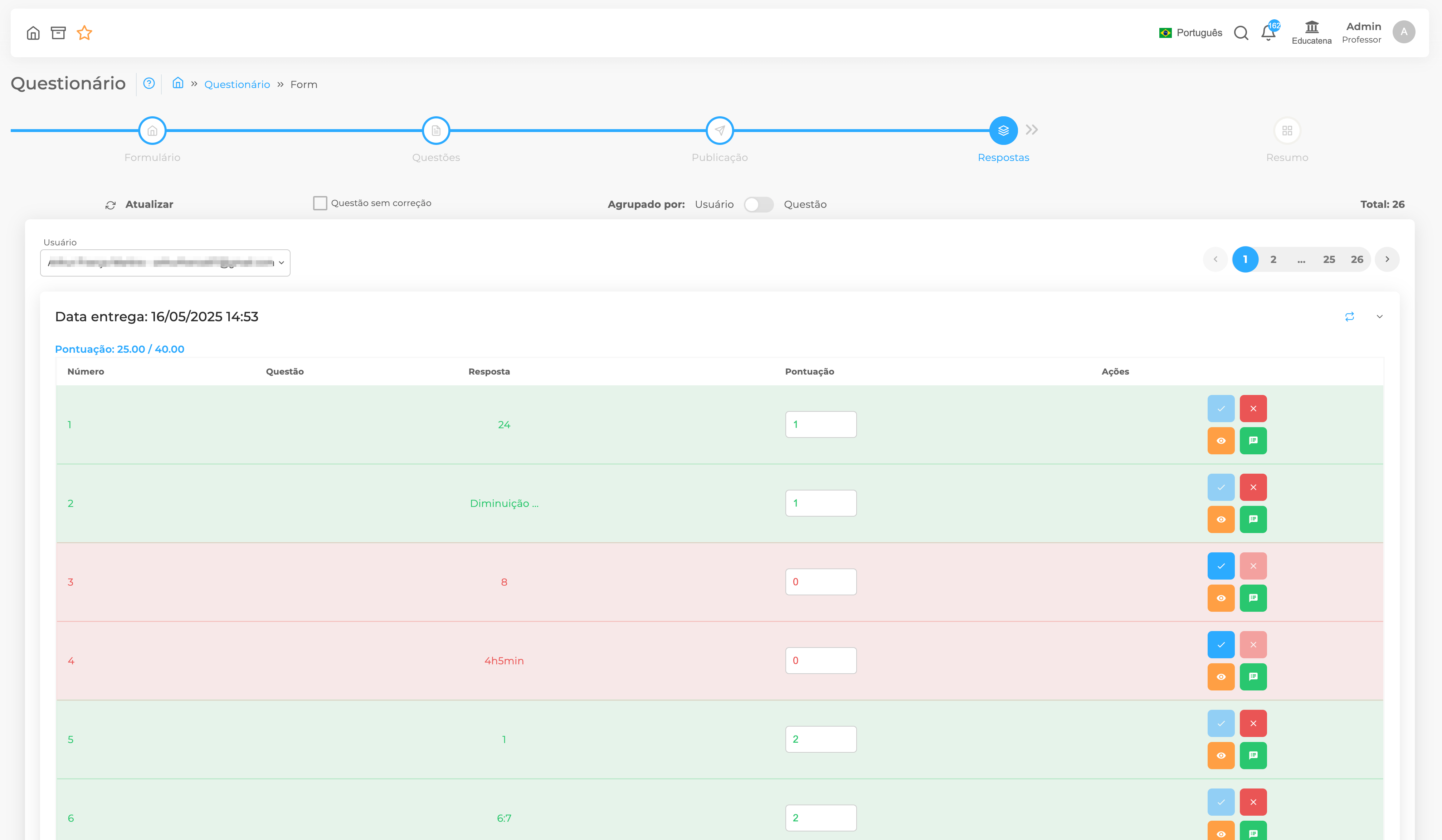
Ask someone else to resolve the issue without consulting the author. This review finds hidden assumptions, template errors and ambiguous passages. Check calculations, fonts, spelling and accessibility of materials.
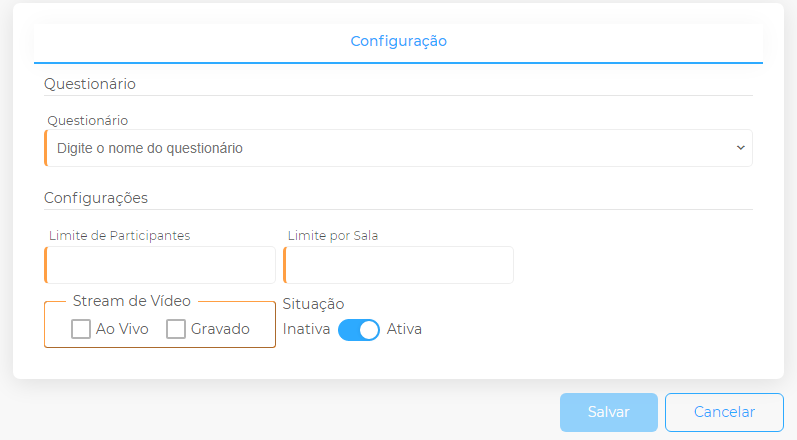
On the platform, validate weight, type of answer, answer key and feedback. View the test as a participant and test on different screens when there are images or files. A correct question in the document may be incorrectly configured in the application.
Learn from application results
Observe success rates, chosen alternatives and questions received. An unexpected result does not alone prove that the item is bad, but it indicates a need for investigation. Compare with taught content and other evidence.
Update the question bank with the date and person responsible for the review. At Educatena, an organized collection facilitates reuse and creation of new assessments, as long as each item is checked before returning to a test.
Use a checklist before approving the issue
Confirm in a single reading whether the skill, statement and response are aligned. Then do separate readings for content, language, accessibility and configuration. Splitting the review helps you notice problems that go unnoticed when everything is checked at the same time.
Ask whether a well-prepared person could make a mistake due to unforeseen interpretation and whether someone without knowledge could get it right due to clues. Also check if the time required is compatible with the test and if supporting materials load correctly.
Finally, register the version and person responsible for approval. A checklist does not eliminate professional judgment, but it reduces repetitive errors and makes the process more consistent when different authors collaborate in the same database.
For reused questions, please review the history before approving. Changes in context, legislation, data or language can make an item out of date. Also review whether previous exposure compromises its use in a higher impact assessment.
When there is automatic feedback, check whether the explanation teaches without contradicting the answer key and whether it will be displayed at the appropriate time. Content, correction and feedback need to form a coherent unit.
Keep the extension compatible with the skill. Long texts are relevant when reading and selecting information are part of the objective; outside this context, they can introduce a barrier that distorts the result. The same goes for repetitive calculations and data that does not participate in the solution.
Read the complete set to identify repetition of content, concentration of difficulty or dependence between items. A question can be well written in isolation and still unbalance the test when observed alongside the others.
Conclusion
Good questions combine alignment, clarity, precision, and review. By recording objectives, preparing criteria, and analyzing results, teachers build a more reliable database of assessments that truly show what participants have learned.