Virtual Assessment Room: supervision of tests in real time
Learn how to organize a virtual room, distribute supervisors, monitor participants and record incidents during online tests.
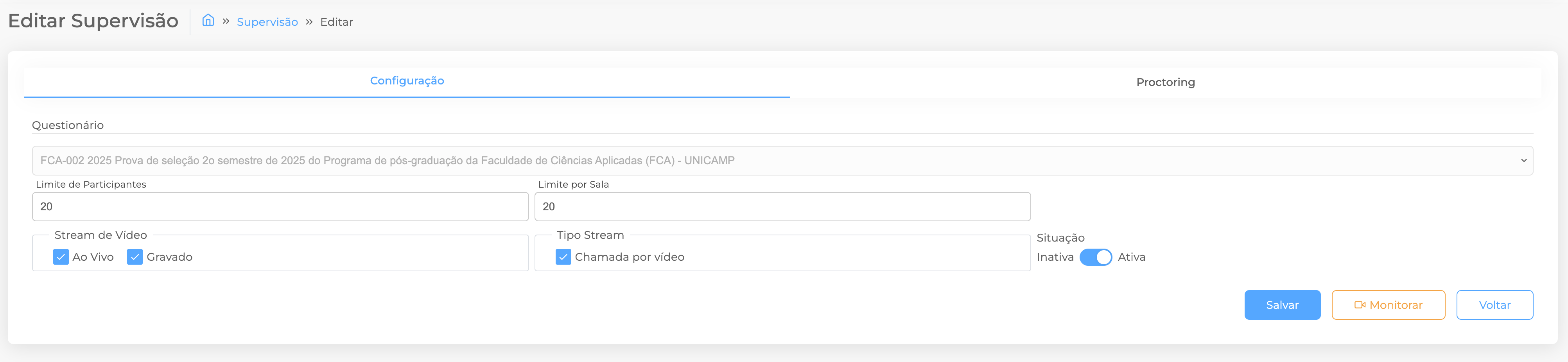
A Virtual Assessment Room organizes remote monitoring of participants during a test. It brings together supervisors, monitors or inspectors in an environment in which it is possible to observe sessions, communicate guidelines and record incidents according to rules defined by the institution.
The feature is especially useful when the assessment requires synchronous monitoring. To function well, however, the room needs planning: adequate number of people responsible, common criteria, technical testing and a protocol for unexpected situations.
What is a Virtual Assessment Room?
It is a digital space associated with the application of the test in which authorized people accompany participants. Instead of bringing everyone together physically, the institution organizes remote sessions and uses communication and monitoring resources to support inspection.
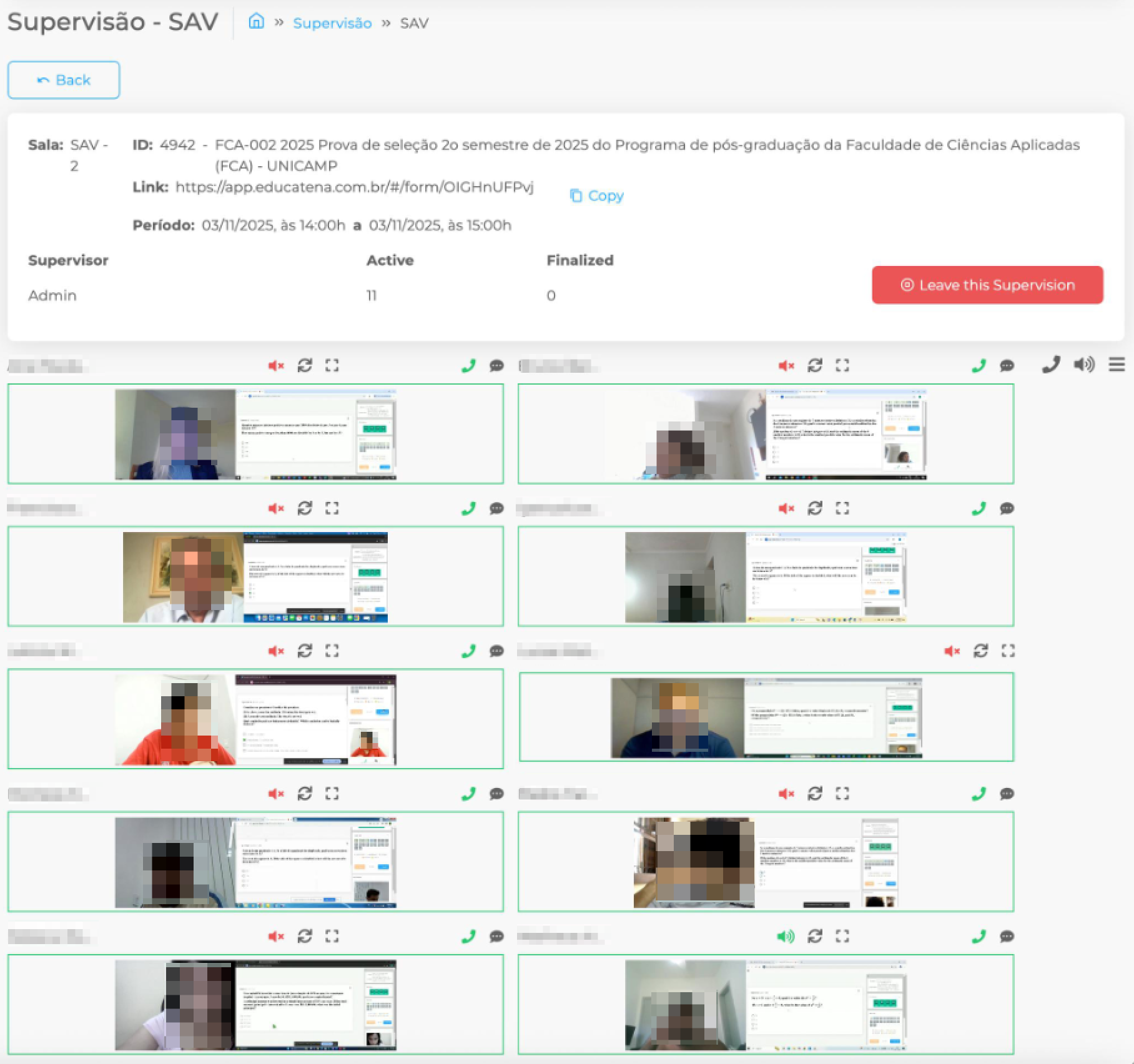
At Educatena, the room connects to the assessment flow. The team can monitor webcam and screen sharing, chat or video call, and record relevant events. Permissions and responsibilities must be assigned according to the application organization.
Plan the supervisory team
Define who coordinates the application, who monitors participants and who responds to technical problems. The number of people per supervisor must allow realistic observation and response in an adequate time; it varies depending on complexity, resources used and team experience.
Hold an alignment meeting with a script, rules and examples. Everyone needs to know what can be resolved directly, what must be recorded and what needs to be forwarded to coordination. This preparation reduces contradictory decisions.
- Distribute participants and guardians before opening.
- Define an internal channel for team communication.
- Standardize occurrence categories.
- Establish people responsible for support and escalation.
- Record decisions that affect the application.
Guide participants before the test
Explain what equipment will be needed, how to enter the room and what resources will be accompanied. Inform permitted materials, rules for breaks and how to ask for help. Communication must be sent in advance and repeated in summary form at the opening.
An access test allows you to grant camera, microphone, and screen permissions without the pressure of proof. It also helps the team learn about common problems and prepare responses. Participants who are more familiar with the flow tend to request less support during the assessment.
How does real-time tracking work?
During the session, the supervisor observes the enabled features and monitors messages. When it notices a situation foreseen in the protocol, it can guide the participant or record an incident. The intervention must be objective so as not to unnecessarily interrupt concentration.
Chat and video calls allow you to clarify difficulties without exposing the conversation to the entire room. The team must avoid discussing possible irregularities during the test beyond what is necessary to preserve the process. Full analysis can occur later, with records available.
Register occurrences for audit
A useful record informs time, participant, event observed and action taken. Factual descriptions are more appropriate than jumping to conclusions. When the session is recorded, timestamps help locate the corresponding portion.
Educatena can also support post-audit with events highlighted by artificial intelligence. These signals serve to prioritize the review, not to automatically decide. Coordination must compare records, recordings and rules before concluding a case.
Close and evaluate the operation
At the end, confirm participants who sent the test, pending calls and incidents that require analysis. Supervisors should finalize their records while the information is still fresh.
Then, bring the team together to review access issues, attendance volume, clarity of rules, and participant distribution. Small adjustments to the script and communication can significantly improve the next application.
Adopt best practices for supervisors
Supervisors must work with focus, respectful language and common criteria. During the test, instructions must be brief and related to the procedure. Questions regarding content should not receive answers that change the conditions of the evaluation.
When there is a shift change, create a structured handover with active sessions, pending calls and registered incidents. Avoid sharing information through unauthorized channels or keeping unnecessary parallel records.
The coordination must offer training and a space for questions before application. Security does not depend on excessive surveillance, but on a team capable of consistently observing, recording and forwarding situations.
In the end, supervisors must separate observed facts from interpretations. An objective record facilitates subsequent analysis and allows coordination to compare the event to the published rules without relying solely on the memory of those who followed the session.
The well-being of the team also influences the quality of monitoring. Plan breaks, shifts and a realistic number of sessions to avoid fatigue. A person responsible for too many participants may fail to notice requests for help or record incidents without the necessary context.
After each shift, collect questions from supervisors and transform recurring answers into guidance for the entire team. This shared learning avoids different interpretations and improves performance without changing rules during application.
Conclusion
A Virtual Assessment Room combines technology and human work. With a prepared team, transparent rules and consistent records, Educatena's real-time supervision helps institutions monitor remote tests and review incidents with context.