Online tests in selection processes: how to evaluate candidates
See how to structure online tests for selection processes, from defining skills to monitored application and analysis of results.

Online tests expand the possibilities of a selection process because they allow candidates to be evaluated in different locations and organize applications with more flexibility. This convenience, however, needs to be accompanied by objective criteria, clear communication and controls compatible with the relevance of the decision.
The platform is just one part of the process. To produce useful results, the organization must define which competencies will be evaluated, construct questions related to the position or opportunity and establish how the scores will participate in the final decision. The objective is to obtain comparable evidence without losing sight of the context of each candidate.
Define skills and criteria before the test
Start by listing the knowledge and skills really needed for the role. An assessment can verify technical mastery, interpretation, logical reasoning or the ability to resolve everyday professional situations. Each dimension must have a weight consistent with its importance.
Establish cutoff scores, weights and tiebreaker rules before knowing the results. This preparation reduces improvised decisions and makes the process easier to explain. The test does not need to measure all aspects of the candidate: interviews, experience analysis and practical activities can complement the evidence.
Create questions related to the selection context
Generic questions can be useful for fundamental knowledge, but contextualized situations better reveal how the candidate applies what they know. Use direct language, provide all necessary data and avoid information that does not contribute to the problem.
Objective questions allow for automatic correction and quick comparison. Open-ended responses help observe argumentation and decision-making, but require standardized correction criteria. When combining formats, inform the weight of each part and allow enough time to analyze the essay answers.
Configure the application for the candidates' profile
Define date, access window, duration, entry limit and number of attempts. Consider that candidates may be employed or in different time zones and routines. When the test has a fixed time, explain in advance what the participation conditions are.
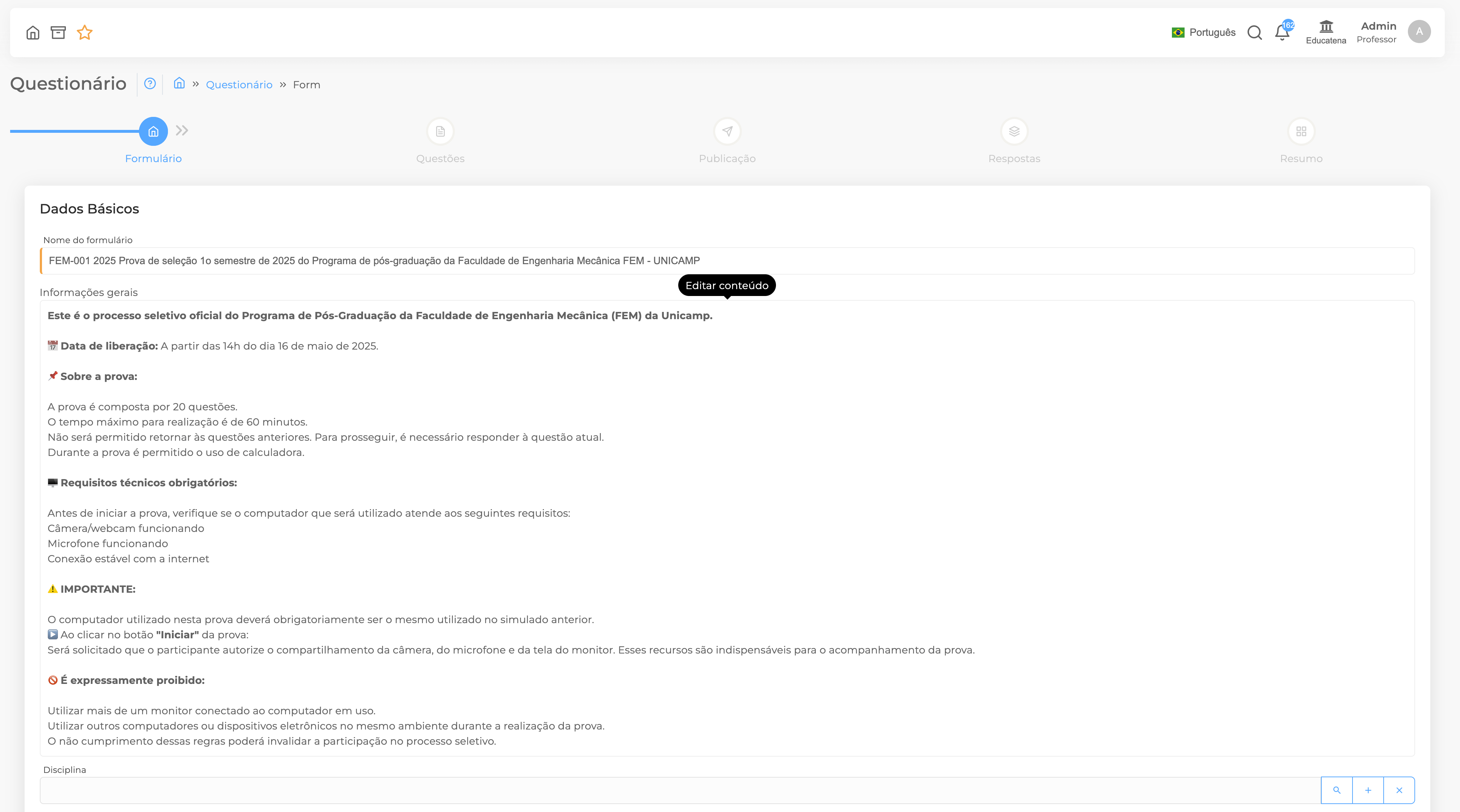
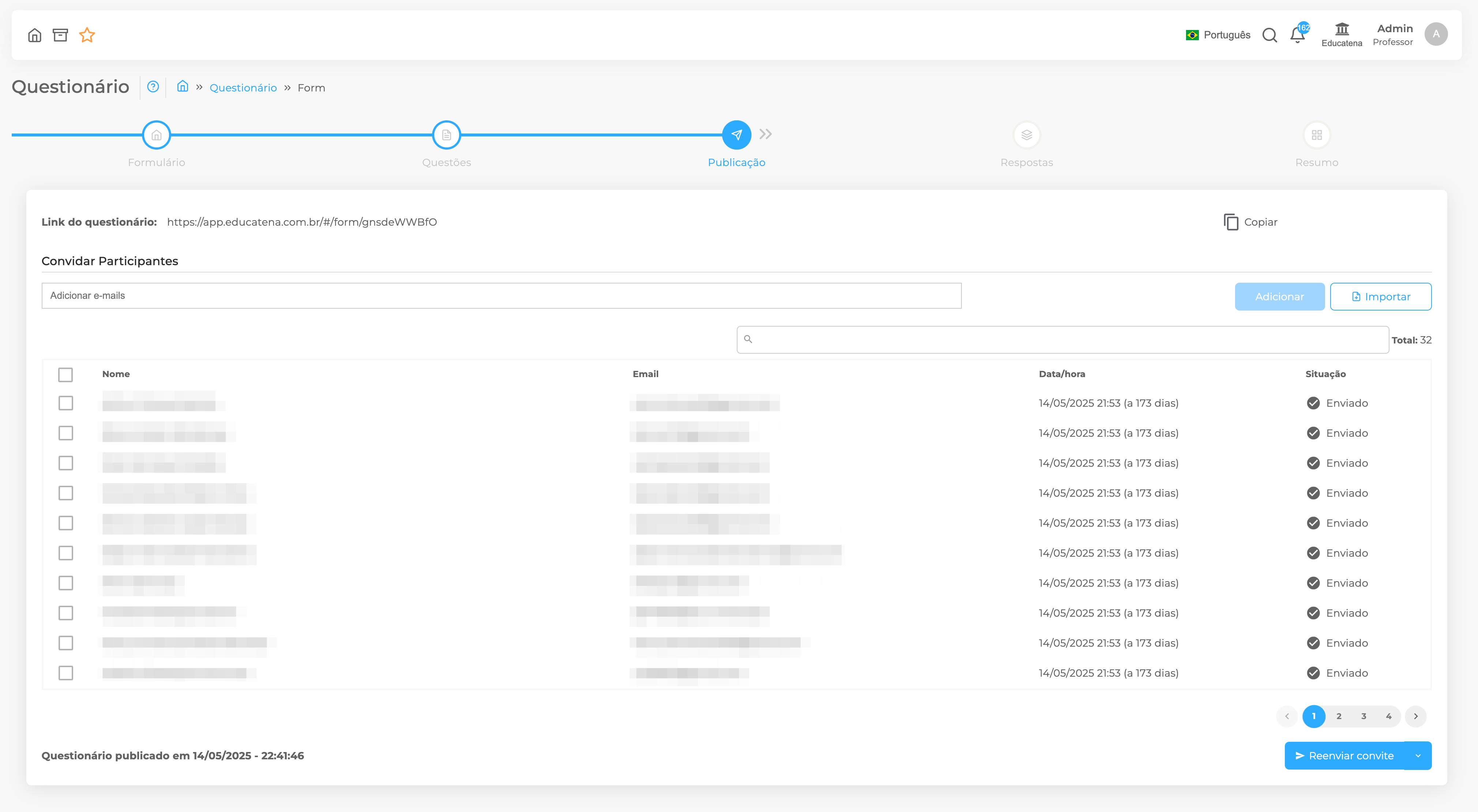
Educatena allows you to distribute assessments, define a cut-off score, configure weights, randomize questions and monitor the application calendar. The settings must be the same for people undergoing the same stage, except for adaptations formally foreseen to guarantee accessibility.
- Send instructions and technical requirements in advance.
- Offer an access test when supervised.
- Inform support channels during application.
- Document rules for interruptions and reapplications.
- Keep correction criteria consistent.
Choose the level of supervision required
A simple screening step can work with basic controls, while higher-impact selections can justify initial identification, webcam, screen sharing, and live tracking. The level of monitoring must consider the risk and the nature of the opportunity.
In Educatena's Virtual Assessment Room, supervisors can monitor participants, communicate via chat or video and record incidents. Recorded sessions can be reviewed after application, including with the support of events highlighted by artificial intelligence. Every incident needs to be interpreted by a responsible person.
Take care of the candidate experience
Assessment also communicates how the organization works. Confusing instructions, inaccessible support, or last-minute requirements increase anxiety and can drive good professionals away. A guidance page should explain steps, duration, permitted materials, and supervision resources.
Use respectful language and communicate what will happen after submission. Even when there is no detailed feedback, the candidate must know when to expect a response and how to get in touch in case of a technical problem. Predictability improves participation and trust in the process.
Analyze results with context
Reports help you compare notes, identify performance by question and check if any items showed unexpected behavior. A wrong question by almost everyone can indicate difficult content, but it also deserves review for clarity and feedback.
Avoid turning a single note into a complete diagnosis. Use the result according to the defined criteria and combine it with other steps when necessary. At the end, record learnings about time, issues, support and incidents to improve the next selection.
Use a checklist before opening the stage
Confirm that all candidates have received the same guidance and that the list of participants is up to date. Review criteria, cut-off score, weights, duration, templates and those responsible for the service. Do a test application with someone who was not involved in the setup to find unclear instructions.
Prepare messages for predictable situations, such as credential not received, camera blocked, or temporary loss of connection. The answer may depend on the organization's rules, but it must be defined before the test and applied consistently.
After approval, limit changes and keep a record of versions. If a correction is essential, assess the impact on those who have already started and communicate the decision. Traceability protects candidates and responsible staff.
Include experience in devices and connections compatible with published requirements in the conference. The objective is not to reproduce every possible combination, but to validate the main path and discover obvious barriers before they reach the candidates.
Conclusion
Online tests make selection processes more organized when skills, rules and criteria are defined before application. Educatena connects creation, distribution, supervision and reporting to support consistent selection, keeping the final decision under the responsibility of the organization.