Performance reports: how to transform results into decisions
Learn to interpret results by student, class, content and question to plan interventions and improve future assessments.
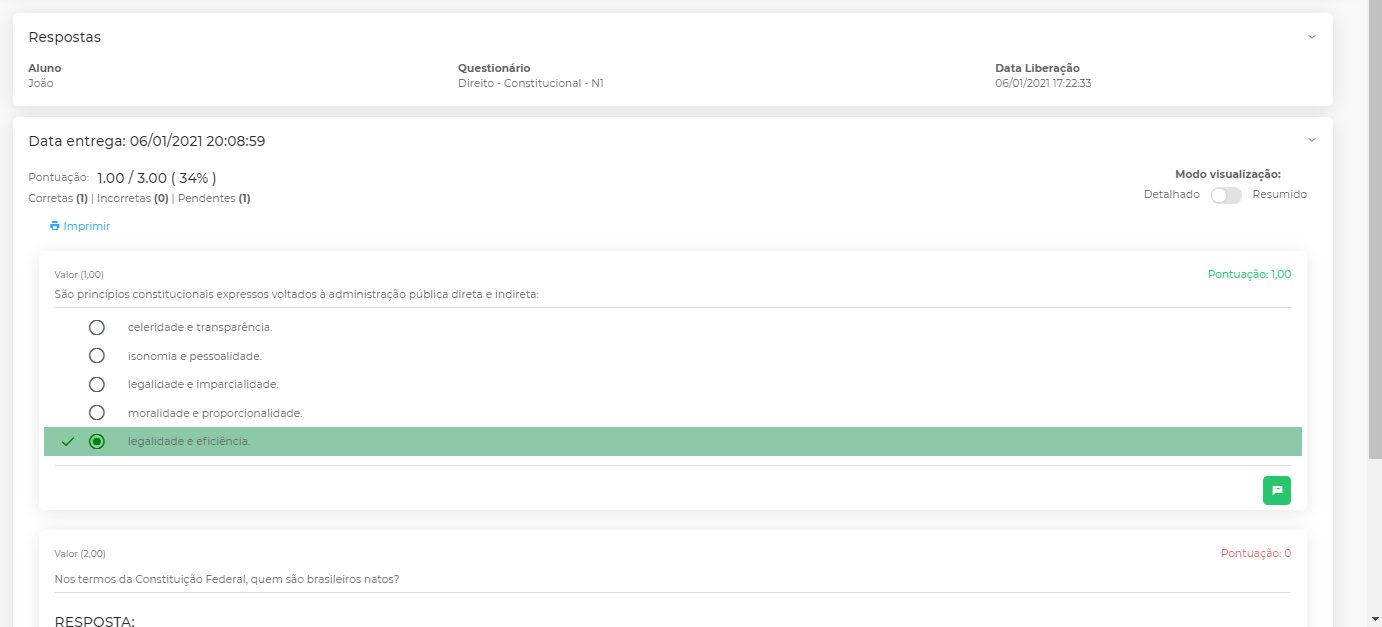
An assessment generates more information than a list of grades. When the results are organized by participant, class, question and content, they help to identify consolidated skills, recurring difficulties and points in the test itself that need review.
Reports do not make decisions alone. They present evidence that needs to be interpreted in light of the objective of the assessment, the classes, the audience and the conditions of application. The value is in transforming data into specific actions, monitored over time.
Return to the objective before analyzing
Start by asking what the test was intended to measure. A diagnostic activity must reveal starting points; a formative assessment needs to guide next steps; a summative test verifies results at the end of a period. The same number can lead to different decisions in each context.
Also confirm the evaluation matrix. If a piece of content received few questions, a single answer can significantly change the indicator. Avoid broad conclusions from limited evidence and record when data needs to be supplemented by activities, observations, or new assessments.
Analyze individual performance
Note what skills each participant demonstrated and where they encountered difficulty. The total score summarizes performance, but it can hide different profiles: two people with the same score may have gotten completely different sets right.
Use this reading to guide feedback, support materials, or recovery opportunities. Instead of labeling the student, describe what the results show at that moment and what actions can help them move forward.
Compare class standards
The collective vision helps to find content that needs to be revived. If many participants miss items related to the same skill, plan a different explanation, additional examples, or practice activity before moving forward.
Compare groups only when objectives, criteria and conditions are equivalent. Calendar, profile or application differences may alter the result. Comparison should serve to raise questions and plan support, not to produce rankings without context.
Investigate the behavior of questions
Questions with many errors may represent difficult content, but they may also have ambiguous wording, an incorrect answer key or insufficient material. Read comments and check whether alternatives have produced unexpected interpretations.
Items with almost universal success also deserve attention: perhaps they confirm fundamental knowledge or perhaps they are too simple for the purpose. Record decisions to maintain, adjust or remove the issue to preserve the quality of the bank.
- Check the statement and template.
- Observe the distribution of chosen alternatives.
- Compare the result with the assessed skill.
- Consider technical occurrences of the application.
- Document changes before reusing the item.
Turn indicators into actions
A useful analysis ends with responsible parties and next steps. Define which content will be resumed, who needs support, which issues will be reviewed and when new evidence will be collected. The action must be proportional to what the data allows us to conclude.
At Educatena, reports and results are connected to the assessment flow and can support reading from different perspectives. Coordination and teachers can use this information to prepare feedback and plan upcoming activities.
Track evolution over time
An isolated piece of evidence is a photograph. To understand evolution, use coherent instruments at different times and observe whether interventions produced change. It is not necessary to repeat exactly the same questions, but the objectives need to be comparable.
Record context and decisions with the indicators. Changes to class, content, criteria or format affect the comparison. A well-documented history makes the analysis more responsible and helps the institution learn from the evaluation process itself.
Communicate results to different audiences
Students, teachers and coordination need different levels of detail. The student needs to understand their performance and next steps. The teacher needs to analyze issues and skills. Management can observe aggregated patterns to support planning, without losing the pedagogical context.
Choose visualizations and language that suit each audience. An unexplained graph may suggest certainties that the data do not support. Include the period, population analyzed, criteria and possible limitations so that the reading is responsible.
Protect individual information and share only what is necessary for the purpose. Before presenting comparisons, check whether groups and instruments are equivalent and whether the exposure will contribute to concrete action.
Finalize the communication with decisions, responsible parties and follow-up date. Recurring reports are more useful when they maintain comparable definitions and sections, allowing us to observe whether the proposed actions had the expected effect in the following cycle.
Avoid selecting only indicators that confirm a previous impression. Look for evidence that might contradict the hypothesis and talk to someone who knows the class. This care reduces hasty reading and turns the report into a starting point for investigation, not a verdict.
Record questions that the data cannot yet answer. They can guide new instruments, conversations or cuts, preventing gaps from being filled by assumptions. Responsible analysis also recognizes its limits.
Conclusion
Performance reports become valuable when they lead to questions, actions and follow-up. Educatena organizes results to support teachers and institutions, but pedagogical interpretation continues to be the link that transforms data into learning.